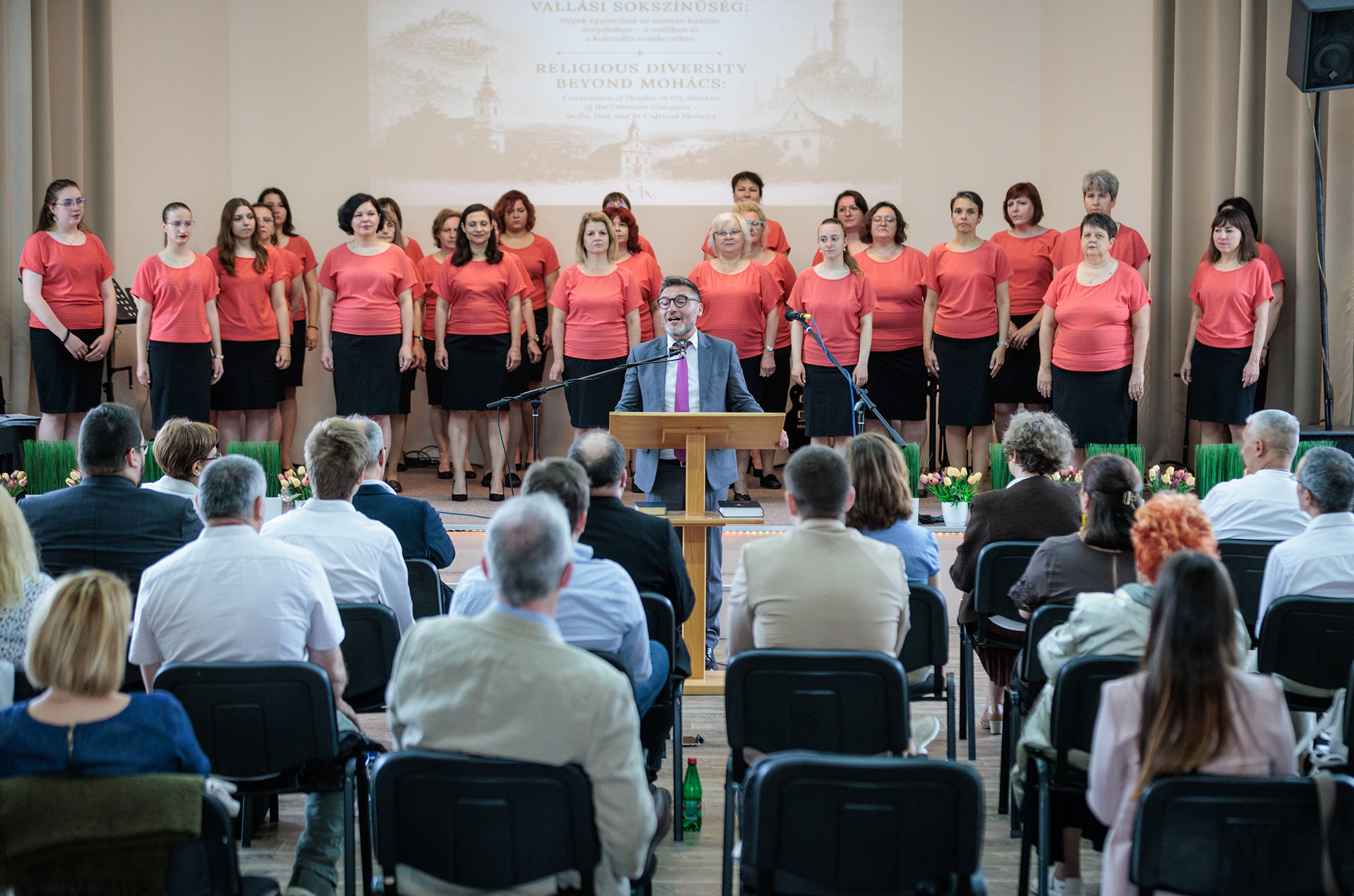
On 6 June 2026, the fourth international academic conference, Károli Forum MMXXVI, was held in Subotica under the auspices of the Gáspár Károli Centre for Protestant Studies. Entitled “Religious Diversity Beyond Mohács: The Coexistence of Peoples in the Shadow of the Ottoman Conquest – In the Past and in Cultural Memory”, the event brought together scholars from Serbia, Hungary, Romania, and Ireland. Through historical, ethnographic, and social-scientific approaches, participants explored questions of religious diversity, interconfessional relations, and cultural memory in Central and East-Central Europe.
This year’s Forum was organised to mark the 500th anniversary of the Battle of Mohács, one of the defining events in the history of Central Europe. Recognising that the Ottoman conquests and the political transformations that followed 1526 profoundly shaped the ethnic, religious, and cultural landscape of the region, participants examined the emergence and development of multi-ethnic and multi-confessional communities, as well as their place in contemporary cultural memory.
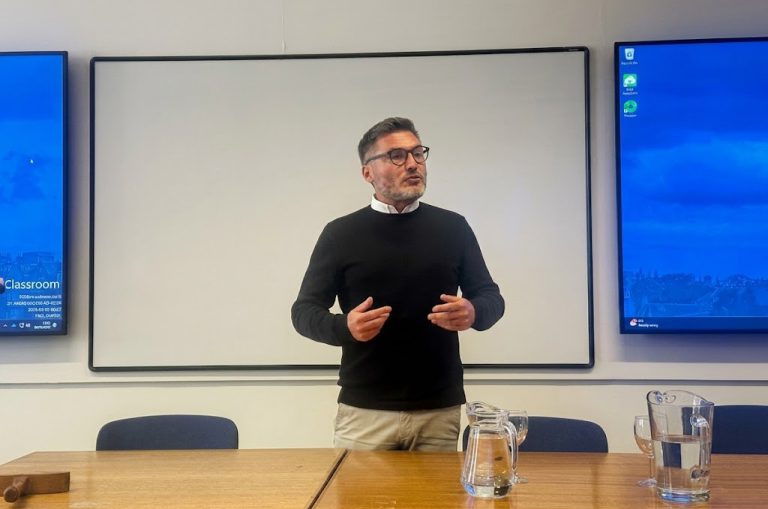
The programme opened with welcoming remarks, followed by a performance of the ProMusica Chamber Choir under the direction of Krisztina Csikós. The keynote lecture was delivered by Dr Graeme Murdock of Trinity College Dublin. In his presentation, entitled “Remembering the Reformation in 1817”, Professor Murdock examined the commemoration of the tercentenary of the Reformation in Transylvania and the Habsburg Monarchy, highlighting the role of historical memory in the formation of confessional identities.
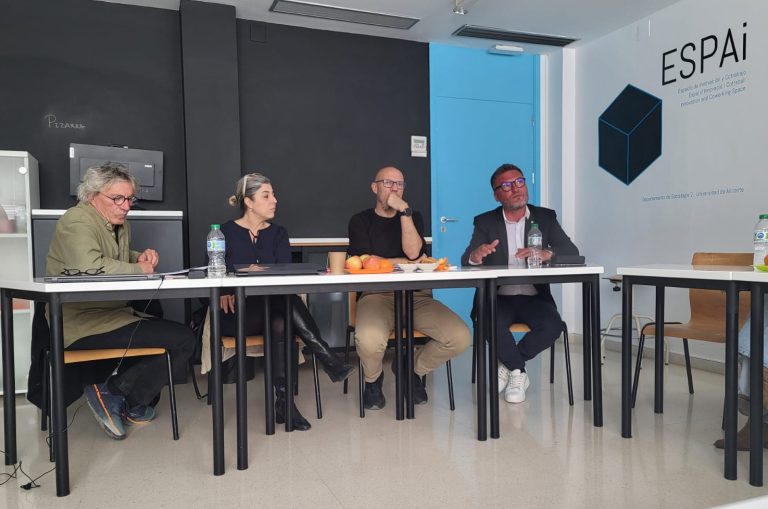
The first panel focused on religious diversity and confessional coexistence in the shadow of the Ottoman world. Dr Sándor Előd Ősz of the Protestant Theological Institute of Cluj-Napoca presented Deva as a multicultural town of the early modern period, while János Éliás of the University of Debrecen discussed the schoolmasters of Reformed communities in Bačka from their establishment until the mid-nineteenth century.
The second panel addressed confessional communities, social structures, and everyday religious practice. Dr Adrienn Tengely of Eszterházy Károly University in Eger examined interconfessional conflicts arising from differences in religious calendars in eighteenth- and nineteenth-century Hungary. Dr Krisztina Frauhammer of Gál Ferenc University in Szeged presented research on prayer books intended for women as a valuable source for the study of religious culture and the mutual influences of different confessions, while Endre Bíró of the University of Szeged analysed the economic position of Reformed congregations within the Nagyszalonta Reformed Church District.
The third panel explored the relationship between religion, society, and the memory of Mohács in the modern period. Dr Tamás Melkovics of Eötvös Loránd University discussed the relationship between Protestantism, liberalism, and nationalism in the political thought of Count Károly Zay. Richárd Morvai-Rácz, a research associate at the Gáspár Károli Centre for Protestant Studies, presented demographic and social changes in the former Bács-Bodrog County between the late seventeenth and early twentieth centuries, while Dr Tibor Klestenitz of the Ludovika University of Public Service in Budapest analysed representations of the Battle of Mohács in Catholic and Protestant periodicals published during the commemoration of its four-hundredth anniversary in 1926.
Throughout the conference, particular emphasis was placed on the importance of interdisciplinary approaches to the study of religious and cultural diversity, as well as on the need for further research contributing to a deeper understanding of the historical processes that shaped Central and East-Central Europe. Participants stressed that experiences of coexistence among different peoples and confessions form an important part of the region’s historical heritage and that their study can contribute to contemporary dialogue and mutual understanding.
Once again, the Károli Forum confirmed its significance as a venue for scholarly exchange across disciplines and generations, providing a platform for the discussion of new ideas and the development of international cooperation. By bringing together researchers from several European countries, the Forum reaffirmed its role as an important academic platform for the study of the relationship between religion, society, culture, and historical memory in Central and East-Central Europe.
Among the distinguished guests of the conference were Dr Attila Dudás, Professor at the Faculty of Law of the University of Novi Sad and Justice of the Constitutional Court of Serbia, as well as Erika Kabók, member of the Executive Board of the Hungarian National Council responsible for information and public communication.